Tag: Crop Science Society of America

  • Benefits of Biosolids Spread Across Decades of Research for Plant Nutrient Uptake

    For more than four decades, biosolids have been applied to land and studied by researchers for many useful purposes. Biosolids are a product of the wastewater treatment process. Yes, that means sewage. However, the sewage is treated carefully to ensure it has beneficial properties and is not harmful.

    Biosolids are produced by separating liquids from the solids in wastewater. The solids are then treated to produce a semisolid that is nutrient rich. Jim Ippolito, a professor at Colorado State University, is an expert on the years of work on biosolids and its benefits. He and a colleague, Ken Barbarick, recently reviewed 45 years of biosolids land application research.

    “All of this research occurred in Colorado, which in and of itself is amazing. Most other states don’t have the same level or depth of research history,” Ippolito says. “Regardless, we highlight early work where scientists were using basic soil science knowledge to tackle the use of this product. We also discuss current discoveries where biosolids improve soil health in various ecosystems.”

    The research was published in the Journal of Environmental Quality, a publication of the American Society of Agronomy, Crop Science Society of America, and Soil Science Society of America.

    Jim Ippolito (right) and Steve Blecker (left) perform soil sampling in wheat-fallow rotation plots. The plots have received agronomic biosolids applications since 1999. Ippolito’s research highlights the benefits of biosolids land application to raise plants to feed animals, to raise crops to feed people, and to do these things safely. Credit: Jim Ippolito

    When and why did the use of biosolids begin? It can be traced back to the United States Clean Water Act of 1972. The act gave the Environmental Protection Agency a mission to govern potential water pollution. Part of this was setting standards for municipalities to meet when cleaning their wastewater prior to discharge. Cleaning wastewater generates biosolids, which also have federal regulations.

    “As far as I know, there are no other biosolids review articles that span the timeframe between the creation of the Clean Water Act to present,” he says. “This overarching review article is a one-stop shop for anyone interested in the beneficial reuse of biosolids. Our research highlights the benefits of biosolids land application to raise plants to feed animals, to raise crops to feed people, and to do these things safely.”

    Biosolids are visible on top of the soil in this wheat field during hot, dry, and windy conditions. The biosolids were applied about 10 months prior to the photo taken. Applying biosolids has been found to improve the health of the soil in semi-arid grazed rangeland settings to allow plant growth as a source of food for animals like cattle. Credit: Jim Ippolito

    Over the years, scientists have found many benefits of biosolids. One is that biosolids can be applied to semi-arid agricultural areas and supply crops, such as wheat and corn, with more of the mineral, zinc. This means that humans and animals can benefit from zinc consumption by eating these crops. This is particularly useful while billions of people across the world do not get enough zinc in their diet.

    “Micronutrients, like copper and zinc, found in biosolids actually come from the entire municipal infrastructure, such as copper piping and zinc solder,” Ippolito explains. “They are likely also present because they are necessary nutrients for plants, animals, and humans. Furthermore, we shed these and other elements when we go to the bathroom. They concentrate in biosolids along with copper and zinc from the municipal infrastructure.”

    Many cities have their own biosolids recycling systems.

    Biosolids have been found to improve the health of the soil in semi-arid grazed rangeland settings to allow plant growth as a source of food for cattle. In the face of a rapidly changing climate, it can make the landscape more resilient. Ippolito says that findings like these are highly valuable because one third of all land in the United States is rangeland or pastureland.

    Additionally, biosolids have been tested and found to be useful in other applications, such as when a landscape is recovering from a forest fire or when land has been mined. They provide energy for soil microorganisms which, in turn, improve nutrient cycling that helps plants thrive across landscapes.

    “We’ve done a lot of good for the state of Colorado and other similar states in terms of beneficially reusing this product that would otherwise be landfilled,” Ippolito says. “Why throw away something that is beneficial? I’ve essentially modeled my career around ways to use biosolids and other products to improve environmental quality in a sound manner.”

    Jim Ippolito gives special thanks to Dr. Ken Barbarick for creating a legacy in Colorado biosolids land application research.

    The yellow and green vehicle is a new piece of equipment used to spread biosolids at the Meadow Springs Ranch in Colorado. Biosolids are a product of the wastewater treatment process that are treated to enhance beneficial properties. Credit: Jennifer Ward
  • Getting to the Root of How to Grow Cowpea in Difficult, Dry Conditions

    Cowpea is an important crop in many parts of the world, especially sub-Saharan Africa. It is resilient and can grow in areas with little rainfall and low-quality soils. But as hardy as it is, cowpea yields can decrease by drought and low levels of soil phosphorus.

    A high-resolution root hair image taken from a cowpea seedling root sample. The image was taken after 14 days of growth on germination papers. Root hairs play important roles in cowpea tolerance to drought and poor soils. Credit: Saba Mohammed

    In a recent study, researchers determined cowpea root characteristics that could help the plants grow better in drier, low-phosphorus soils.

    “Developing cowpea varieties that can produce optimally under stressful conditions is vital,” says Saba Mohammed, lead author of the study at Ahmadu Bello University in Zaria, Nigeria. “These resilient cowpea varieties can help make more people food and nutrition secure.”

    The study was published in Crop Science, a publication of the Crop Science Society of America.

    Cowpeas are a key source of calories for millions of people across the world. They are rich in protein and other nutrients. Cowpea plants also have a variety of other uses. They can serve as animal fodder and green manure.

    Microbes in cowpea root nodules can increase soil fertility. These microbes make atmospheric nitrogen available to plants in the soil – a process called nitrogen fixation. Nitrogen fixation can be beneficial for farmers who cannot afford nitrogen-based fertilizers.

    Most cowpeas production is in semi-arid regions. Harsh environmental conditions and poor soils often hamper yields. “Our work established that certain root characteristics increased the yield of cowpea plants under drought or low soil phosphorus conditions,” says Mohammed.

    These root features include longer primary roots and higher numbers of lateral roots emerging from primary roots. Root hairs also play important roles in cowpea tolerance to drought and poor soils.

    For example, cowpea plants with longer, denser root hairs had higher yields when grown in low-phosphorus conditions. “That suggests these root hair features play crucial roles in acquiring phosphorus from sub-optimal soils,” says Mohammed.

    Scientists have long known that roots are a key part of how plants adapt to difficult environmental conditions. “The root system is half of the whole plant system,” says Mohammed. “Yet, it has been relatively under-explored in finding solutions to farming constraints.”

    Root systems have diverse strategies for extracting resources from soil. “For instance, plants with deeper roots produce better than those with shallow roots under limited water conditions,” he says. “On the other hand, those with shallow roots may be more suited to soils with suboptimal nutrients.”

    A field experiment on cowpea at the Institute for Agricultural Research in Minjibir Agricultural Research Station, Kano State, Nigeria. Cowpea crops are resilient and can grow in areas with little rainfall and low-quality soils. Credit: Saba Mohammed

    That’s because nutrients – like phosphorus – are often concentrated in the top layer of soil.

    For cowpea plants growing in dry and nutrient-limited soils, roots need to go deeper and spread wide and shallow.

    “Our study shows that we can focus on cowpea varieties with longer taproots for drought tolerance and higher numbers of shallower basal roots to extract soil nutrients,” says Mohammed.

    While root architecture can provide valuable information, examining root features of mature plants can be a time-consuming and exhausting process. Mohammed says it is easier and more economical to phenotype roots at the seedling stage.

    The study showed that examining roots of cowpea seedlings could help identify root features in mature plants that are beneficial for growth in challenging environments.

    “Our goal is to use the study results to breed new cowpea varieties,” says Mohammed. “These new varieties would perform optimally under limited water and low soil phosphorus conditions.”

    Many small-scale and subsistence farmers may be unable to afford phosphate fertilizers. The new cowpea varieties Mohammed describes would benefit these farmers tremendously. However, he explains that developing new varieties with desired root features can also be a valuable resource in systems where intensive irrigation and fertilizers are used. These cowpea varieties can help reduce production costs and minimize environmental pollution from excessive fertilizer use.

    American Society of Agronomy, Soil Science Society of America, Crop Science Society of America: Collectively, these Societies represent more than 12,000 individual members around the world. Members are researchers and professionals in the areas of growing our world’s food supply while protecting our environment. Together we work toward solutions to advance scientific knowledge in the areas of agronomy, crop science, and soil science.

  • Impacts of Winter Grazing, Integrating Crop-Livestock Systems

    Winter grazing is part of what is called an integrated crop-livestock system. It is a process where livestock, such as cattle or goats, are allowed to graze a crop field during the winter. It is more common in climates with mild winters. Rather than eating the cash crop the farmer sells, the livestock eat the cover crop that was planted to grow over the winter.

    Winter grazing is a useful option for farmers who also raise livestock. They can feed them using cover crops they were going to plant anyway, a cost-efficient and sustainable practice. But how does winter grazing impact the soil underneath? Hayley Crowell, researcher at Auburn University, and her team worked to find out.

    Researcher Hayley Crowell collects cotton root samples to be evaluated for fungi colonization rates. These measurements will help the team evaluate the soil health of the integrated crop-livestock system. Credit: Audrey Gamble

    “Finding the best management practices to improve soil health and maximize economic gains can improve the livelihoods of producers in the Southeast and all over the world,” she explains. “This is possible by using cropland year-round and potentially improving crop productivity through increased soil health.”

    This study was published in Agrosystems, Geosciences & Environment Journal, a publication of the American Society of Agronomy, and Crop Science Society of America.

    They performed a study for two years on a site in Alabama. The team started the experiment in October 2018 beginning with planting the cover crops. The grazing began and then the first cash crop of the experiment was planted in the spring. The cash crop was harvested in mid-October. Next, the cover crops were planted shortly after harvest.

    In mid-January after the cover crop was well-established, they allowed livestock to graze the fields until it was time to plant more cash crops in the spring and repeat the process. In their experiment, they let cattle graze the fields for different lengths of time and studied the soil carefully. “Soil chemical properties are very important to understanding and evaluating soil health,” Crowell says. “Various soil chemical indicators are related to basic soil functions. These include promoting microbial activity, controlling water flow, nutrient cycling, and physical stability.”

    They tested for soil organic carbon and active carbon to check for impacts on soil organic matter, which is viewed by most as very important for soil health. The team also analyzed what is called water stable aggregates and penetration resistance. These are qualities of soil that impact how it takes in water and how well plants grow in it. Lastly, they studied the microbes in the soil, many of which are beneficial to plants.

    Rows of cotton, a cash crop, grow among bits of cover crop left on the soil surface. Cover crops are plants grown during the off-season. Credit: Hayley Crowell

    After the first two years of their study, the scientists did not find that winter grazing impacted the soil very much. This means there were no positive effects. However, it also means there were no negative effects. This is useful information for farmers practicing winter grazing.

    “Our data points to how farmers can use this style of management without seeing a big change in soil health in the first two years,” Crowell says. “The study was only based on data from two years. So, it’s not too surprising that our data didn’t point to significant changes in soil health between the different grazing treatments. With more time, we will hopefully be able to paint a clearer picture of how the length of winter grazing impacts soil health.”

    Crowell stresses that this is part of a long-term study, and will require further research collecting more data on the impacts of winter grazing on soil. It is possible cattle hooves stepping on the soil will compact it, or that their manure will provide benefits to the soil. These are just a couple of possibilities that will be examined in future work.

    “There is limited research on integrated crop-livestock systems that are designed to promote soil health,” she says. “While some producers are already incorporating winter grazing into their cropping system, they are not necessarily managing it in a way to improve soil health. This is what our study aimed to investigate.”

    Funding for this research was provided by the Alabama Natural Resources Conservation Service.

  • Getting a Solid Soil Response to Biosolids Application in Ag

    Many people do not know that human waste can be recycled to benefit the environment. After intense treatment, it can be applied to fields in the form of biosolids.

    While scientists know that this can benefit the soil, they are still learning about the best ways to measure this. In addition, it can be hard to determine how much it helps the soil over a long period.

    That’s where Yocelyn Villa from the University of California, Merced comes in. She and her collaborators studied fields in California where biosolids have been applied for 20 years.

    Their findings were recently published in Journal of Environmental Quality, a publication of the American Society of Agronomy, Crop Science Society of America and the Soil Science Society of America.

    “Our goal was to assess how stocks of soil carbon have changed over time at each of these sites,” she says. “We did this by measuring how much carbon is present compared to adjacent areas without biosolids application. Specifically, we wanted to account for not only shallow soil depths, but also deep soil carbon, down to 100 cm depths.”

    The three sites they studied had different biosolids application frequencies, management practices, and soil texture. The researchers focused on measuring microbial biomass carbon and nitrogen, soil organic carbon, and total nitrogen. These are all soil qualities known to benefit from the application of biosolids.

    They predicted that the more biosolids that are applied, the more carbon and nitrogen there would be in those soils. Most of their results were what they expected. However, they were surprised that the site that had the highest application of biosolids did not show the most change. In addition, one of the sites did not show a benefit from the biosolids application until they performed tests on the deeper soil.

    Soil sample were taken using an auger at five different depth increments (Photo by Rebecca Ryals).

    “If we had only taken the top 30 cm into account, we would have not detected a change in soil carbon at the Merced site,” Villa said. “This is the biggest and most important finding.”

    She adds that this shows how the organic matter in biosolids does not simply sit in the soil and accumulate. Instead, it is impacted by dynamic properties that also influence soil organic matter.

    This told the researchers that it’s important to measure deep soil carbon and consider other management practices at a site when studying the impact of biosolids. These local controls can be soil texture, irrigation practices, and tillage.

    “Many studies have shown the benefits of biosolids application for plant production and nutrient cycling,” Villa explains. “This conjointly provides benefits to soil carbon. Farmers and ranchers have seen differences in vegetation for livestock and other soil health benefits. I would recommend monitoring these benefits through time.”

    Different areas were roped off to create transects. Along each transect, soil samples were taken every 10 meters (Photo by Rebecca Ryals).

    Another reason scientists are interested in soil carbon is because of its potential to mitigate climate change. Soils that can sequester carbon can keep it out of the atmosphere. So, Villa’s findings highlight the importance of taking deep soil carbon into account to better predict a soil’s ability to mitigate climate change.

    “This research is interesting to me personally because I have always been interested in climate change,” she says. “The more I learned about the environment, the more I realized that soils may be the key to mitigate climate change.”

    The next steps in Villa’s work are to determine how exactly the soils stabilize carbon and keep it in the soil. She is also assessing where the carbon is in the soil, which will provide insight on how accessible the carbon is for microbes to use. Overall, she is excited to see others beginning to appreciate soil’s potential.

    Biosolids have been used in cities like Chicago for several years, to help clean up industrial sites and other purposes.

    “I think people don’t realize that human waste can be recycled like this, and that soil is a potential solution to climate change,” she says. “It’s always a treat to see how people’s faces light up with intrigue. Hopefully I have convinced them that we need to stop treating soil like dirt!”

    Funding for this research was provided by the Bay Area Clean Water Agencies, Jena and Michael King Foundation, and Department of Life and Environmental Sciences at the University of California, Merced.

    Biosolids are applied using a spreader in agricultural soils. All biosolids applied in the study had similar nutrient composition (Photo by Rebecca Ryals).

    American Society of Agronomy, Soil Science Society of America, Crop Science Society of America: Collectively, these Societies represent more than 12,000 individual members around the world. Members are researchers and professionals in the areas of growing our world’s food supply while protecting our environment. Together we work toward solutions to advance scientific knowledge in the areas of agronomy, crop science, and soil science.

    Twitter@ASA_CSSA_SSSA & @SSSA_soils | FacebookASACSSA & SSSA | Instagram@sustainablefoodsupply & @iheartsoil

  • Measuring Nitrogen in Green Manures (Cover Crops)

    A crimson clover plant, which is generally recommended to grow in a mixture of grasses, which was used in this study (photo by Sandra Wayman)

    Both chemical fertilizers and cover crops can help build the nitrogen content in soil. But cover crops come with many other benefits, like improving soil structure and boosting beneficial microbes. Researchers at Cornell University are looking at ways to help breed better cover crops, also known as green manures, that could help farmers in their quest to grow crops in the most sustainable way. Their results were published in Crop Sciencea publication of the Crop Science Society of America.

    Katherine Muller and her team are working on strategies to measure nitrogen fixation in breeding programs for two common cover crops: crimson clover and hairy vetch. Both crops can pull nitrogen from the air to help them grow. This is called nitrogen fixation.

    “Green manures are crops used to improve soil fertility,” says Muller. “They help the soil by adding nutrients. We look at legumes, which bring nitrogen into the soil due to their symbiotic relationship with bacteria.”

    The use of legume green manures has been around for thousands of years. However, after the 1950s, chemical fertilizers became the main nitrogen source for farmers in developed countries. This is because two scientists, Haber and Bosch, found a way to pull nitrogen from the air, and make chemical fertilizer.

    Though this type of fertilizer is productive, it also takes energy to make it – and it can easily slip into water bodies if not managed correctly.

    “Cover crops are important ecological management tools,” says Muller. “They foster microbial communities and put nutrients in the soil. Essentially, they help build fertile soil that can supply nutrients when plants need them.”

    The use of cover crops can be risky to farmers because they cannot determine the exact amount of nitrogen supplied to the soil. Chemical fertilizers allow for the exact calculation of the amount of nitrogen applied to a crop. But how much nitrogen is provided by each type of cover crop isn’t a known number.

    The amount of nitrogen supplied by a legume cover crop depends on how well it grows and how much of its nitrogen comes from fixation versus uptake from soil. Currently, cover crop seeds available do not have selective breeding for nitrogen fixation – a valuable trait.

    Plant breeders are working to develop cover crop varieties that reduce the risks and increase benefits to farmers. They hope that better varieties will increase the use of cover crops as an alternative to chemical fertilizer. Nitrogen fixation is one of their top priorities for legume green manures.

    “We aim to help plant breeders develop strategies to target nitrogen fixation in cover crops,” explains Muller. “Because nitrogen fixation is a complicated trait that changes as plants grow, the timing of measurements is important.”

    A root system of a hairy vetch plant, with nodules that contain a symbiotic nitrogen fixing bacteria (Photo by Katherine Muller).

    For farmers, the most important measurement of nitrogen fixation is when the crop is terminated. Legume green manures are usually terminated in the late flowering stage. Earlier termination means the crop is likely to resprout and become a weed. However, breeding programs for hairy vetch and crimson clover cannot take that measurement, as they need to remove the plant before cross-pollination.

    “Our team did a field experiment with an active breeding program,” says Muller. “We collected plant tissues and measured nitrogen fixation. We were able to tell how much of the plant’s nitrogen comes from fixation versus the soil.”

    The team tested three kinds of samples that a plant breeder may take to compare them to the sample most relevant to farmers. They then measured nitrogen fixation by sending their samples to a lab that measures total nitrogen content and the abundance of a naturally occurring stable isotope.

    Nitrogen from soil usually has a higher abundance of the nitrogen stable isotope than nitrogen from fixation. This allows researchers to estimate the proportion of nitrogen a plant obtains from soil versus fixation.

    “Our recommendation is to collect stems from each plant in the early flowering stage to measure the nitrogen fixation via stable isotopes,” says Muller. “This provides a good proxy for nitrogen fixation in whole plants, measured in the late flowering stage that is more relevant to farmers.”

    According to Muller, if breeders are going to add one measurement, it should be this. The proportion of nitrogen obtained by fixation often does not correlate with plant size or other measurements.

    “It is important to measure actual nitrogen fixed in the cover crop because it can vary,” says Muller. “Farmers want to know how much nitrogen they are bringing into their fields. We need to accurately measure and provide this information to help farmers make decisions. We hope our research will encourage more farmers to adopt legumes cover crops as a nitrogen source.”

    Katherine Muller is a postdoctoral researcher at Cornell University. This research was done in conjunction with the Legume Cover Crop Breeding Project, funded by the United States Department of Agriculture.


    American Society of Agronomy, Soil Science Society of America, Crop Science Society of America: Collectively, these Societies represent more than 12,000 individual members around the world. Members are researchers and professionals in the areas of growing our world’s food supply while protecting our environment. Together we work toward solutions to advance scientific knowledge in the areas of agronomy, crop science, and soil science.

  • Why Mix Varieties of Wheat in a Field?

    You’ve probably heard of the value of diversification in your financial portfolio. Having more than one type of financial investment reduces risk of losing all your money. My research involves lowering risks for farmers who grow wheat in a sustainable practice of crop mixtures.

    A typical wheat field is one variety, a monoculture production. This tends to be common because it is the most efficient method. However, this type of specialization often requires additional inputs, fertilizers, pesticides, and other chemicals, to maintain the high yields that is expected of modern agriculture. This, in turn, can cause a cycle of reliance on these chemical inputs.

    Various head diseases are shown among the different varieties of wheat in the study. Credit: Julie Baniszewski

    Consider a wheat field with a severe pest infestation, such as aphids or cereal leaf beetle. Once these pests arrive in susceptible wheat field, chemicals may be required to control the pest before it damages the crop. There is risk to hurting beneficial insects like ladybird beetles that might be able to help control the pests naturally. Even ground beetles could be injured. The farmer must control the aphids, as they can kill a lot of the wheat plants – decreasing the food supply and harming the farmer’s profits. But using pesticides also starts to create a loop of continually needing more pesticide application as “good insects” are controlled along with the pests.

    My work involves an alternative solution that reduces risks for farmers and keeps growing a healthy food supply. Our research group is working to create crop mixture systems. Crop mixtures can be intra-specific, containing the same species, or inter-specific, containing different species.

    Aphids, a common pest in wheat, were lightly glued onto cardstock and monitored for 24 hours to quantify predation by native insects. The card on the right shows that four tiny aphids remain; the card the left shows the aphids were consumed by a ladybird beetle. Credit: Julie Baniszewski

    In many cases, interspecific mixtures, also called polycultures, have a different set of challenges in modern agriculture. It’s difficult to use specialized machinery for multiple crops.

    Intraspecific mixtures can be much easier because farmers can manage them as they would a typical monoculture. In the context of a wheat crop, a mixture would consist of two to four varieties of wheat. Each variety would have a different set of traits. One may be high yielding, another resistant to insect pests and yet another resistant to specific diseases. By combining these different sets of traits, the crop is more consistent year to year. The field is more diverse genetically and better able to reduce or withstand pest abundances and diseases – just like diversifying a stock portfolio.

    A wheat field in one year of the researchers’ experiments. Here, different varieties are noticeable because of physical differences – namely color or hue and if the head has awns on it or not. Credit: Julie Baniszewski

    With these wheat mixtures in mind, we created a three-year field experiment to determine if mixtures could:

    • suppress diseases,
    • increase predation of insect pests and
    • increase yield and economic value.

    Each year, we planted a wheat mixture comprised of four varieties. We compared the mixture results to stands with only the single varieties planted separately. We sprayed only half of each plot with chemical pesticides. This was to measure if the mixtures provided an environmental benefit similar to chemical inputs. We quantified insect predation using aphids, diseases, yield, and economic return over variable costs for each of our plots.

    Shown here is the difference of a fungicide application within one variety. The left side of the photo shows the control side of the plot that had no chemical fungicide applied. The slightly darker coloring of the wheat is largely due to disease. The right side of the photo shows the fungicide-sprayed side of the plot. The lighter coloring is healthier wheat, which often also has a few additional days to mature, thereby increasing yield. Credit: Julie Baniszewski

    The yield results were about the same as similar studies, so no surprises there. We found that fields sprayed with fungicides did have higher yields – but only enough to cover the expenses related to fungicide application.

    Some good results: the mixed variety plots had inhibited spread of foliar disease in the field comparable to the fungicide application. Although the wheat mixture was not the highest yielding, nor did it provide the greatest return over variable costs, it did inhibit disease to an extent consistent with a fungicide application – about 20-25%.

    The value of crop mixtures is both a portfolio diversifier and an insurance policy. Although a higher-yielding, single variety wheat field may do well consistently for several years, having the same genetics in the same field has vulnerabilities. In one of those years, there could be a severe pest or disease outbreak, or a severe drought or climate event that that one variety is vulnerable to.

    By using crop mixtures, we increase the genetic diversity and safeguard against a complete crop failure that could occur with that single variety. The genetic diversity from the other combining varieties in mixtures may have disease or pest resistance and may thrive under otherwise stressful climatic conditions. That is, diverse crop mixtures, like financial portfolios, are more stable than any single variety.

    By Julie Baniszewski, Pennsylvania State University, American Society of Agronomy and Crop Science Society of America. Our members are researchers and trained, certified, professionals in the areas of growing our world’s food supply while protecting our environment. We work at universities, government research facilities, and private businesses across the United States and the world.

  • Research Helps Develop High-Yielding, Drought Tolerant Lines of Chickpea

    Chickpeas are a very important crop and food in India. They are used almost every day in meals and snacks. India is the largest producer, consumer, and importer of chickpeas. And with good reason — they are high in protein, fiber, and vitamins and minerals.

    While India grows about 12 million tons of chickpeas each year, the national yield of the crop has not increased much over time. However, the need for more chickpeas to feed the increasing population continues to grow.

    This is why a group of researchers across several research institutions in India are working to develop high yielding chickpea varieties. The team recently reported their results in The Plant Genome.

    “High yielding varieties will help small-holder farmers by delivering more produce with an option to increase income,” says Rajeev Varshney, member of the Crop Science Society of America. “It is important to develop better varieties that are tolerant to drought and are able to meet the demand.”

    Rajeev Varshney, a research program director at the International Crops Research Institute for the Semi-Arid Tropics, examines a chickpea crop (Credit: ICRISAT)

    Over time, chickpea production has moved from northern India to the central and southern parts of the country, where there is less water. This is in addition to climate change impacting global agriculture.

    Varshney and his collaborators set out to breed new varieties of chickpeas with drought tolerance and higher yields. They used genetic techniques to breed several traits for drought tolerance. They focused on popular chickpea varieties already grown by farmers.

    The team used a common method called introgression, where a popular variety is crossed with a variety with the desired traits. Following a series of evaluations and repeated crossings, the breeders arrived at an improved chickpea variety with the desired traits.

    “However, this conventional process is not very precise, and in this procedure, breeders need to screen a large number of plants in field conditions,” Varshney explains. “For example, if there is a lot of rain in that season, breeders cannot select the line for drought tolerance. It ruins the whole experiment.”

    To combat this, the researchers used a technique called marker-assisted backcrossing. It uses laboratory techniques to detect a genetic marker. Genetic markers are DNA segments associated with certain plant characteristics or agronomic traits desired by farmers.

    By being able to detect certain plant characteristics in the lab using genetic markers, there is no need to do lots of testing every year in the field. It makes the breeding process precise, fast, and cost-effective.

    The work helped incorporate drought tolerance into three popular varieties of chickpeas. Overall, researchers developed six lines of chickpea with higher yields under drought conditions. One line, Pusa Chickpea 10216, has been released for use by Indian farmers.

    “We worked with already released elite varieties that are preferred by farmers,” Varshney says. “By improving these, it’s more likely they will be adopted by farmers in a faster manner.”

    “Here we have demonstrated successful use of using genetic markers to develop drought tolerant chickpea varieties,” Varshney says. “We would like to see this kind of breeding being deployed by our national partners at a large scale in India, Ethiopia, Kenya, Tanzania, and elsewhere.”

    This research shows the public benefits of this kind of genetic research. Maintaining strong public support and funding for the research pipeline allows such work to take place.

    “The work shows how genomics research can be used to develop better high-yielding drought tolerant varieties,” Varshney says.

    Rajeev Varshney is a research program director at the International Crops Research Institute for the Semi-Arid Tropics (ICRISAT) and Adjunct Professor with Murdoch University (Australia). Support for this research was provided by the Government of India through its Department of Biotechnology in the Ministry of Science and Technology, Department of Agriculture, Cooperation & Farmers Welfare in the Ministry of Agriculture & Farmers Welfare, and the Bill & Melinda Gates Foundation.

    Flowers are incredibly striking when in full bloom (Photo by L. Vidyasagar)

    American Society of Agronomy, Soil Science Society of America, Crop Science Society of America: Collectively, these Societies represent more than 12,000 individual members around the world. Members are researchers and professionals in the areas of growing our world’s food supply while protecting our environment. Together we work toward solutions to advance scientific knowledge in the areas of agronomy, crop science, and soil science.

    Twitter: @ASA_CSSA_SSSA & @SSSA_soils | Facebook: ASA, CSSA & SSSA | Instagram: @sustainablefoodsupply & @iheartsoil

  • Celebrating Seed Week – Food Security and Hope

    To bring awareness to the importance of seeds, the Crop Science Society of America is celebrating Seed Week March 22-28, 2021.Seed week logo

    Anyone who plants a seed is investing in hope. That’s one of the attractions of seeds. For the gardener, it could be hope for a beautiful flower, or perhaps a delicious zucchini squash. For our farmers, seeds are the hope of this year’s yields of produce, cash crops or forage. No matter the size or shape of the seed, they all can bring forth new life.

    Seeds also are crucial for the food security of the human population. Scientists keeps seeds in seed banks in case of disaster. They use seeds from different cultivars to breed new crops that are disease resistant. Other attributes for new varieties like drought tolerance and improved shelf life start with the genetic material contained in seeds. Sometimes genetic diversity needs to be stored in other ways, but the large majority of the genetic information of our crops is contained in seeds.

    The content collected for Seed Week includes:

      • Seven new blog posts just for Seed Week, in addition to ones previously published on the Sustainable, Secure Food Blog. Topics include:
      • A collection of CSSA news stories about seed science.
      • A video about a crop scientist who studies seed germination.
      • Science research from journals published by CSSA.
      • A variety of K-12 activities to learn about seeds.
    Seeds in being inspected at the USDA (Photo by Scott Bauer)

    American Society of Agronomy, Soil Science Society of America, Crop Science Society of America: Collectively, these Societies represent more than 12,000 individual members around the world. Members are researchers and professionals in the areas of growing our world’s food supply while protecting our environment. Together we work toward solutions to advance scientific knowledge in the areas of agronomy, crop science, and soil science.

    Twitter: @ASA_CSSA_SSSA & @SSSA_soils | Facebook: ASA, CSSA & SSSA | Instagram: @sustainablefoodsupply & @iheartsoil

  • Helping Stevia Brave the Cold

    It’s a fact – humans love sugar. For those of us who also like to watch our calories, sugar substitutes can help.

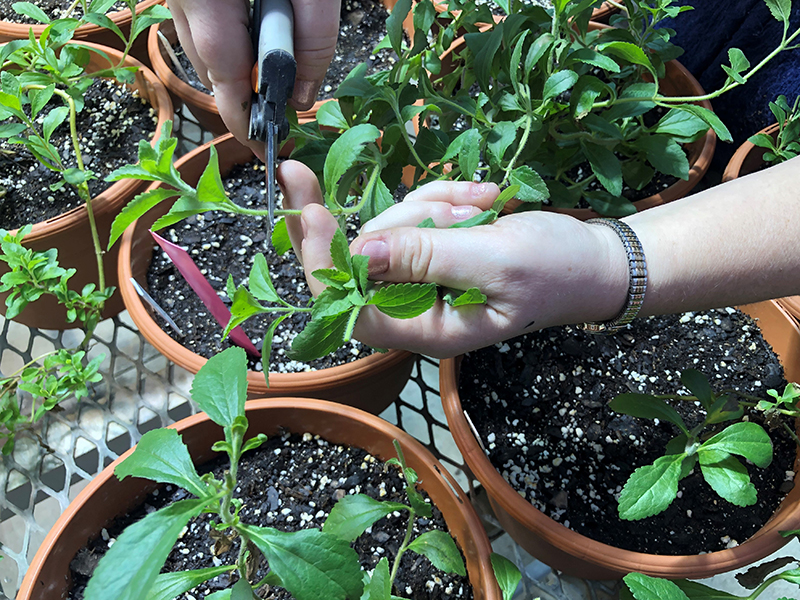
    Some zero-calorie or low-calorie sweeteners have attracted bad reputations for containing unnatural ingredients. But there are also natural sweeteners derived from plants, like steviaHands holding snipping tool cutting off a piece of a stevia plant

    Stevia is hundreds of times sweeter than sugar, and it has no calories. The global stevia market is now worth hundreds of millions of dollars.

    The sweetener is derived from the leaves of the plant Stevia rebaudiana, a native of Paraguay and Brazil. The leaves make chemicals similar enough to sugar to trick the tongue. But our body doesn’t burn these chemicals as fuel.

    Todd Wehner is a plant breeder who aims to develop stronger varieties of stevia. These better varieties can help farmers and consumers alike.

    His research was published in Agrosystems, Geosciences & Environment, a journal of the American Society of Agronomy and Crop Science Society of America.

    “The market is growing rapidly as companies and consumers move away from sugar in their diet,” says Wehner.

    Although this tropical plant is grown around the world, it faces hurdles growing in cold climates. Freezing temperatures can dramatically injure or even kill stevia plants in short order. That makes it harder for farmers in countries like the U.S. to grow the sweet crop.

    So, plant breeders like Wehner are interested in finding the hardiest stevia plants out there to help crops brave the cold.

    “As we continue to select varieties that are cold tolerant in our area, new releases will have adaptation to a wider production region,” says Wehner.

    With his teammates, Wehner recently shared findings about the cold tolerance of different stevia varieties. Their results can help scientists breed cold-hardy stevia plants better adapted to the U.S. and other temperate climates.

    To find the strongest plants, the research team subjected 14 varieties of stevia to different cold stress tests. The tests ranged from just below to just above freezing. Plants were exposed to cold for anywhere from 2 to 10 days. After the stress tests, the scientists assessed how much damage the plants sustained.

    A couple varieties were clear standouts in their ability to resist the cold. These varieties might be useful for breeders who want to make cold tolerant stevia crops.

    The plants grew normally after being moved to warmer conditions. This allowed researchers to harvest seeds for the next generation.

    The temperature of the test really mattered for measuring hardiness. Somewhat surprisingly, some varieties that were resistant to temperatures just above freezing were some of the most susceptible to temperatures just below freezing. That finding provides useful information for how breeders should test for cold tolerance in the future.

    “It appears that we will need to select for cold tolerance using a range of temperatures, so that we avoid the problems where a selection is resistant to only one temperature,” says Wehner. “Tests will become a standard part of the breeding program.”

    Wehner and his team are now providing the seeds of the most cold-tolerant varieties to any other interested researchers. Recruiting other scientists to contribute can increase the pace of improvements to stevia.

    The team is also studying other types of improvements to the crop. These include increasing the germination of seeds, beefing up resistance to diseases, and improving the production of leaves and sweetener chemicals.

    “We are continuing to develop new varieties that will be higher yielding and better tasting. New varieties will be less expensive to produce as the genetics are improved for the environments of interest,” says Wehner.

    “For the 95% of humans who like stevia, we are continuing to make these products taste better,” he adds.

    Todd Wehner is a plant breeder at North Carolina State University. This work was supported by PepsiCo and United States Department of Agriculture Specialty Crop Research Initiative grants.

    American Society of Agronomy, Soil Science Society of America, Crop Science Society of America: Collectively, these Societies represent more than 12,000 individual members around the world. Members are researchers and professionals in the areas of growing our world’s food supply while protecting our environment. Together we work toward solutions to advance scientific knowledge in the areas of agronomy, crop science, and soil science.
  • How do Radishes Work as a Cover Crop?

    Farmers love tools. The prospect of a fully stocked tool shed ranges from badge of honor to true obsession.  Plants, too, can be used as tools. Integrating cover crops into a farmer’s toolbox can offer many benefits – and it’s a tool given to us by nature!

    Getting farmers to adopt cover crops as various tools can be hard. To do that, we need to better understand these different tools and their uses. Cover crops like clover add nitrogen to the soil, while reducing erosion and runoff. And, radishes, a tasty ingredient in salad, can be used to break up soil and other hard jobs.

    Breaking up soil with radishes

    Millennia ago, Greek philosophers presented the Doctrine of Signatures, stating that a plant’s appearance may resemble its practical use. For example, walnuts were linked to brain health and beans to kidneys. In thinking about the radish as a tool, the plant root could be similarly equated to the drill, a type of natural tilling.

    Thick radish roots are an ideal choice for natural drilling into the soil to reduce compaction. When the radish crops are terminated, the radish and roots leave large, open pores in the soil. This increases soil aeration and water infiltration. Along with this comes more earthworm and microbial activity. It’s clear that a tillage radish cover crop certainly lives up to that name. As it turns out, the simple radish can be quite the complex tool when properly utilized.

    Scavenging and cleanup

    There are many varieties of radish. From ‘Daikon’ to ‘Icicle’, knowing the specific cultivar is an important part of deciding if a radish belongs in your field or on your plate! When an agronomist recommends a radish variety for use as a cover crop, they have a job in mind to make use of these unique plant features.

    Farmers turn to “scavenging” to optimize chemical inputs and yield outputs by using cover crops. The cylindrical roots of the radish grow deep and capture soil nutrients that were intended for the preceding cash crop.

    Many varieties are uniquely suited for this task, having been bred specifically for deep taproots that extend several inches or even feet deeper than their thick quintessential core. By scavenging nutrients from soil layers that are the hardest for most crop roots to access, radishes can be used to target critical areas to keep nutrients from the groundwater table. Though picky eaters may leave behind a harvested radish on their plate, the radish itself helps ensure that as little as possible goes to waste in terms of subsoil nutrients.

    A Daikon radish cover crop emerges after being seeded into standing corn. Radishes help break up soil compaction and use up extra nutrients to reduce runoff. Credit: Ivan Dozier

    Biofumigation – natural chemical combatants

    In March 1990, Former President George HW Bush personified picky eaters everywhere when he issued the proclamation: “I’m not going to eat any more broccoli!” The president succeeded in banning the brassica from Air Force One and the White House.

    The same pungent flavor that the former President didn’t like is loved by many. And its special compounds called gluconsinolates that give them their flavor. These compounds contain sulfur (like some medicines) and can also act as natural pesticides in the soil, a method known as “biofumigation.” These compounds can be a powerful deterrent to insects and even some species of fungi.

    The choice depends on the job

    When choosing a radish and/or any other cover crop, the most important consideration is to select the right tool for the job! For example, planting a radish in a poorly drained clay soil can drastically restrict the root growth necessary for several of the benefits. Selecting the wrong cover crop is like trying to tighten a bolt with a hammer instead of a wrench, which may explain why some don’t see convincing results.

    When choosing a radish for cover cropping, agronomists recommend that farmers select the right tool (specie) for the right job. Shown, a selection of cover crop radishes with roots. Credit: T&T Seeds

    Successful cover croppers often strengthen their polyculture by adding the radish into a multi-species mix. For those looking for a natural multi-tool to alleviate compaction, scavenge subsoil nutrients, and ward away pests, I can assure you that radishes will not leave you with a bitter taste! — By Ivan A. Dozier, CCA, Product Manager for Agronomy & Analytics at IntelinAir (American Society of Agronomy and Crop Science Society of America)