Category: Weather

  • Could Seasonal Wildfires Ruin our Wine?

    Many wine lovers know that a hint of smoky flavors in Zinfandel or Pinot Noir are the perfect complement with grilled meats. They may also be familiar with the phrase, “Stressed vines make the best wines.”

    But what if those smoky overtones go overboard as the grapes are exposed to destructive wildfires? And what if those stressed vines are the result of prolonged drought conditions?

    As the effects of climate change are felt in California wine country and around the world, vintners are anxious about what the future holds. They wonder if some wine regions are becoming too warm to properly grow such signature grapes as Cabernet Sauvignon and Chardonnay. They’re concerned about prolonged droughts that decrease harvest yields and lead to dry conditions that set the stage for massive wildfires. Those fires can not only destroy precious vineyards but also damage fruit through prolonged smoke exposure.

    With so much at stake in the world’s wine industry, UC Davis researchers are focused closely on mitigating the effects of climate change in viticulture. They’re working with the wine industry to study such pressing issues as smoke taint, drought-tolerant rootstocks and other ways that grape growers can adapt to warming temperatures.

    “We’re seeing the impact of climate and climate change,” said Megan Bartlett, a UC Davis plant biologist and assistant professor. “Especially after the heatwaves and the megadrought a few years ago, we really saw, as an industry, declines in (crop) yield. These are really pressing problems, especially now.”

    The spectre of smoke

    The 2020 vintage was a lost year for Stuart Spoto. His premium brand, Spoto Family Wines, sources much of its Cabernet Sauvignon in the Oakville appellation in Napa Valley, on a plot of land that’s also used by UC Davis researchers at Oakville Station.

    As wildfires and hazardous smoke whipped around the Napa Valley in the fall of 2020, Spoto couldn’t help but fret. He’d been through this in 2017, when Napa was similarly engulfed in flames and smoke from the wine country fires.

    While Spoto Family Wines was still able to release a 2017 vintage, this time was different. Early analysis showed that prolonged smoke exposure had most likely tainted the grapes that made the wine, leaving Spoto to scrap the 2020 vintage. Shafer Vineyards in Napa’s Stags Leap District and Somerston of St. Helena were among those who made the difficult decision to forgo the 2020 vintage due to smoke taint concerns.

    “Part of being in Oakville is we have a good team of fellow vintners, and UC Davis is part of that,” said Spoto ’82. “We had a lot of data collected and we relied on other people’s information and sensory evaluations. Sitting down with UC Davis, we had a pretty clear idea to not produce wine.”

    Anita Oberholster uses a large pipette to grab a sample of smoke-exposed wine that’s been sitting in fermentation tanks (photo courtesy of Joe Proudman/UC Davis)

    ‘Can you imagine licking an ashtray?’

    Anita Oberholster, a Cooperative Extension enology specialist at UC Davis, has studied the effects of smoke taint over the past four years, as wildfires have become an annual event in California. She’s now one of the world’s leading experts in the issue.

    If grapes are exposed to smoke, especially for extended periods of time, they can impart unwanted flavors into finished wine. That’s smoke taint, and it has the capability to ruin entire vintages of wine.

    “Can you imagine licking an ashtray?” Oberholster said. “When wines are heavily impacted, it can taste like that.”

    The impact of smoke taint isn’t always cut and dried. You can’t predict which grapes may have suffered damage based on anything intuitive, such as sight, smell or even the flavor of fresh grapes. Just because there’s smoke in the air doesn’t mean grapes are tainted.

    “There are so many variables,” Oberholster said. “Freshness of the smoke, number of times exposed, variety of grape — the list goes on. There’s so much we don’t know.”

    Chemical analysis can help predict the likelihood of smoke taint, but time is of the essence. In the fall of 2020, as grapes hung heavy on the vine in Northern California, commercial labs were backed up for several weeks to test for possible smoke taint. Even if the grapes were unaffected, disruption could still be felt around the wine industry.

    “Growers were in a tough position because buyers were cancelling contracts unless you could prove your grapes hadn’t suffered damage,” said David Block, UC Davis viticulture and enology professor and department chair, “and demand for analysis far exceeded supply.”

    Mysteries and myths

    Thus, the research related to smoke taint continues, with a long list of mysteries and myths to decipher.

    “Number one, are we looking at the right molecules?” Oberholster said. “We can’t fully assess smoke-related issues if we don’t completely understand the nature of the compounds at play.”

    Smoke barriers are also on Oberholster’s radar. She wonders if a spray could be developed that growers could use to protect grapes from the harmful compounds that burning woods emit.

    Additionally, Oberholster hopes to see the development of low-cost sensors that support growers’ ability to estimate smoke-taint risk.

    “That would expand lab capacity because you’d only have to test grapes that were in a high-risk zone,” she said.

    As for myths, Oberholster wants to dispel the misconception that grapes and wine will automatically suffer in smoky conditions.

    “Consumers have no reason to shy away from vintage 2020,” she said. “Winemakers will ensure the quality of the wine is what the consumer expects. They know that if consumers taste wine that is tainted, they won’t reach for it again.”

    Rising temperatures, thirsty vines

    2020 started on a worrisome note in terms of water. In February, the U.S. Drought Monitor classified nearly 60% of the state’s land as “abnormally dry.” That included the wine grape growing counties of Napa, Sonoma, Lake and Mendocino.

    Meanwhile, a broader and equally troublesome trend was emerging in California’s wine country. Napa, for example, was moving into a warmer climate category according to the Winkler Index. Developed at UC Davis by A.J. Winkler and Maynard Amerine, this system classifies the climate of wine growing regions based on a heat summation scale and serves as a guide for which grape varietals are best suited for a given area.

    Back at Oakville Station, Kaan Kurtural works directly with growers regarding climate change and wine. He’s a professor of viticulture at UC Davis who researches rootstocks and clone combinations that show promise in being more drought-tolerant, along with farming practices that mitigate the effects of warming weather. Some future plots at Oakville Station will focus on varietals that are native to southern Italy and Greece and will be tested for plant-fitness in California’s warming climate.

    “I don’t think there was ever a doubt with grape growers that it was happening,” Kurtural said about climate change. “This is bottom-line — grapes are money, it’s business.”

    In response to warming temperatures, Kurtural is testing shade films that can be used in vineyards to filter certain types of ultraviolet light. Grapes can still be grown outdoors but have the potential to stay cooler and expand the growing season with these systems.

    “It was one of the first things that Napa Valley growers asked me to test when I came to UC Davis in 2015,” Kurtural said. “Now we have shades over the rows to block out the vineyards. It looks like you’re growing the grapes in a greenhouse but the site is open.”

    Kurtural is also helping lead a trial that focuses on Napa’s most signature grape: Cabernet Sauvignon.

    This red varietal, which likely accounts for slightly more than half of the Napa Valley’s grape plantings, requires very particular conditions to thrive. It needs warmth to ripen — but too much heat can make its flavors go flat and boozy. And without enough water supply, growers can face low crop yields.

    Kurtural is now part of a research team that’s collaborating with Napa’s Beckstoffer Vineyards and Duarte Nursery in Stanislaus County in what’s been called “the mother of all cabernet trials.” It encompasses 3,600 plants with 10 clones of Cabernet Sauvignon crossed with different 10 rootstocks.

    The trial’s goals are to find the hardiest rootstocks for Cabernet Sauvignon by identifying biomarkers for overexposure and water stress.

    Explained Kurtural, “We’re going to use these biomarkers to identify the most resilient rootstocks and clone combination for Cabernet Sauvignon. “It’s unlikely that things will change overnight,” he added, “or the markets will accept a substitution for Cabernet or (Bordeaux varieties). This will buy us some time to find some breeding material to blend in.”

    Bartlett, the plant biologist, also works to identify traits that can improve drought tolerance in rootstocks. She’s part of a UC Davis project that’s looking at the characteristics of root cells that help the roots maintain water intake from dry soil. Once the genes with those traits are identified, they can screen across large populations for breeding.

    “We’re trying to see how we can solve problems by improving these plants,” Bartlett said. “We want to see how we can scale up these traits for overall stress tolerance and performance from the plant.”

    Harvesting Cabernet Sauvignon grapes at Oakville Experimental Station under smoky conditions in 2017. From left to right are Ph.D. student Raul Girardello, M.S. student Arran Rumbaugh and Anita Oberholster, cooperative extension specialist in the Department of Viticulture and Enology (Photo courtesy Anita Oberholster).

    So as the wine world looks to the 2021 vintage and beyond, questions remain about climate change and what the future may hold.

    “A crystal ball would be nice in terms of climate change,” said Spoto, the Oakville Station winemaker. “I let the experts take the lead. Having UC Davis in our backyard is beyond words for the benefit we get.” — By Chris Macias & Diane Nelson, UC Davis College of Agricultural and Environmental Sciences

  • What Can the 2015 Drought Tell us about the Impacts of a Drought in 2021?

    California Farm Water Coalition – Taking a look back at a similar water year can help us understand what might be in store for us through the rest of this year and possibly beyond.

    California is in a critically dry year, the same as in 2015. Water will be extremely tight for thousands of farmers around the state, and many of them have already received notice that their water supplies are being cut by up to 95 percent.

    In 2015, water supply cuts of that magnitude led to over half a million acres of land taken out of production. Had there been sufficient water supplies in 2015, the amount of land that was fallowed could have produced:

    • 8.6 billion heads of lettuce, or
    • 594 million cartons of melons, or
    • 54 million tons of grapes, or
    • 27 million tons of tomatoes. 

    Instead, because no water was available, those fields produced nothing but weeds.

    California is the No. 1 farm state in the nation with tens of thousands of agricultural jobs, with wages at all income levels covering all 58 counties. When farms aren’t growing food for people, it affects jobs, personal income, and their quality of life. In addition, farm-related jobs contribute hundreds of millions of dollars annually to state and local tax revenue which provide services local communities value, like police, firefighters and teachers.

    In 2015, a total of 21,000 jobs were lost with an economic impact of $2.7 billion across the state.
    Preparing for Drought

    Farmers have been preparing for another drought and have invested heavily in water use efficiency projects, including drip and micro-sprinkler irrigation systems, soil moisture monitoring, and computerized irrigation controllers. But the savings achieved by those investments haven’t been enough to avoid wide-scale land fallowing due to the massive water supply shortages farmers are experiencing again this year.

    Info Graph – Long Term Impacts on California From Water Supply Cuts

    Looking long-term, continuing water shortages will have a devastating effect not only on California farms but also on the farm related jobs throughout our economy.

    The Blueprint Economic Impact Report, available HERE, indicates that over the next 30 years, water supply cuts will lead to the permanent loss of 1 million acres of productive farmland.

    Fewer healthy foods will be available from California farms. The report estimates that California will permanently lose:

    • 86,000 acres of vegetables,
    • 130,000 acres of fruit-producing trees,
    • 129,000 acres of wine and table grapes,
    • 327,000 acres of nuts, and much more.

    These reductions translate into the permanent loss of 85,000 jobs, half of which are off the farm, such as food processing, transportation, wholesale, retail, and ports. They also mean the permanent loss of over $535 million in tax revenue which, again, is used to provide the services local communities value, like police, firefighters and teachers.

    Actions, including better flood management for groundwater recharge, improved conveyance to move water to potential groundwater banking areas, new and enlarged storage projects, and regulatory reform designed to improve in-stream flows for ecosystem benefits while protecting agricultural water supplies can help minimize the effects described above. Federal investments toward improving water supply infrastructure is essential to providing a secure water future to sustain the nation’s food supply, meet urban and suburban needs, and provide for a healthy environment throughout California.

  • Helping Stevia Brave the Cold

    It’s a fact – humans love sugar. For those of us who also like to watch our calories, sugar substitutes can help.

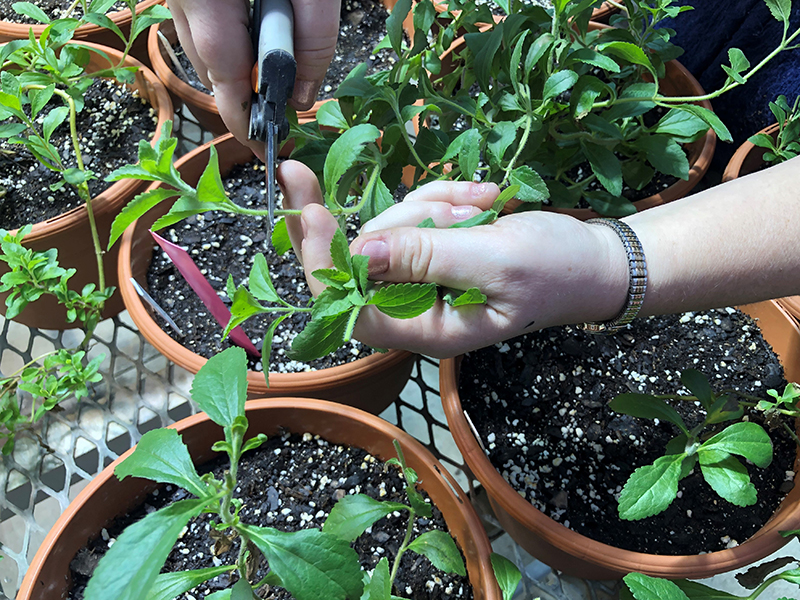
    Some zero-calorie or low-calorie sweeteners have attracted bad reputations for containing unnatural ingredients. But there are also natural sweeteners derived from plants, like steviaHands holding snipping tool cutting off a piece of a stevia plant

    Stevia is hundreds of times sweeter than sugar, and it has no calories. The global stevia market is now worth hundreds of millions of dollars.

    The sweetener is derived from the leaves of the plant Stevia rebaudiana, a native of Paraguay and Brazil. The leaves make chemicals similar enough to sugar to trick the tongue. But our body doesn’t burn these chemicals as fuel.

    Todd Wehner is a plant breeder who aims to develop stronger varieties of stevia. These better varieties can help farmers and consumers alike.

    His research was published in Agrosystems, Geosciences & Environment, a journal of the American Society of Agronomy and Crop Science Society of America.

    “The market is growing rapidly as companies and consumers move away from sugar in their diet,” says Wehner.

    Although this tropical plant is grown around the world, it faces hurdles growing in cold climates. Freezing temperatures can dramatically injure or even kill stevia plants in short order. That makes it harder for farmers in countries like the U.S. to grow the sweet crop.

    So, plant breeders like Wehner are interested in finding the hardiest stevia plants out there to help crops brave the cold.

    “As we continue to select varieties that are cold tolerant in our area, new releases will have adaptation to a wider production region,” says Wehner.

    With his teammates, Wehner recently shared findings about the cold tolerance of different stevia varieties. Their results can help scientists breed cold-hardy stevia plants better adapted to the U.S. and other temperate climates.

    To find the strongest plants, the research team subjected 14 varieties of stevia to different cold stress tests. The tests ranged from just below to just above freezing. Plants were exposed to cold for anywhere from 2 to 10 days. After the stress tests, the scientists assessed how much damage the plants sustained.

    A couple varieties were clear standouts in their ability to resist the cold. These varieties might be useful for breeders who want to make cold tolerant stevia crops.

    The plants grew normally after being moved to warmer conditions. This allowed researchers to harvest seeds for the next generation.

    The temperature of the test really mattered for measuring hardiness. Somewhat surprisingly, some varieties that were resistant to temperatures just above freezing were some of the most susceptible to temperatures just below freezing. That finding provides useful information for how breeders should test for cold tolerance in the future.

    “It appears that we will need to select for cold tolerance using a range of temperatures, so that we avoid the problems where a selection is resistant to only one temperature,” says Wehner. “Tests will become a standard part of the breeding program.”

    Wehner and his team are now providing the seeds of the most cold-tolerant varieties to any other interested researchers. Recruiting other scientists to contribute can increase the pace of improvements to stevia.

    The team is also studying other types of improvements to the crop. These include increasing the germination of seeds, beefing up resistance to diseases, and improving the production of leaves and sweetener chemicals.

    “We are continuing to develop new varieties that will be higher yielding and better tasting. New varieties will be less expensive to produce as the genetics are improved for the environments of interest,” says Wehner.

    “For the 95% of humans who like stevia, we are continuing to make these products taste better,” he adds.

    Todd Wehner is a plant breeder at North Carolina State University. This work was supported by PepsiCo and United States Department of Agriculture Specialty Crop Research Initiative grants.

    American Society of Agronomy, Soil Science Society of America, Crop Science Society of America: Collectively, these Societies represent more than 12,000 individual members around the world. Members are researchers and professionals in the areas of growing our world’s food supply while protecting our environment. Together we work toward solutions to advance scientific knowledge in the areas of agronomy, crop science, and soil science.
  • USDA Extends Application Deadline for the Quality Loss Adjustment Program

    The U.S. Department of Agriculture (USDA) is extending the deadline from March 5 to April 9 for agricultural producers to apply for the Quality Loss Adjustment (QLA) Program because of recent winter storms and some clarifications to program rules. This program assists producers who suffered crop quality losses due to qualifying 2018 and 2019 natural disasters.

    “Because of recent winter storms and some program updates, we want to provide five additional weeks for producers to apply for the program,” said Zach Ducheneaux, Administrator of the Farm Service Agency (FSA). “I want to make sure eligible producers have the opportunity to apply and to work with our team members to help with any questions. We recently clarified policy to ensure producers who sold grain to the feed market due to quality issues are adequately compensated.”

    About the Program

    The QLA program assists producers whose eligible crops suffered quality losses due to qualifying drought, excessive moisture, flooding, hurricanes, snowstorms, tornadoes, typhoons, volcanic activity, or wildfires.

    Eligible crops include those for which federal crop insurance or Noninsured Crop Disaster Assistance Program (NAP) coverage is available, except for grazed crops and value loss crops, such as honey, maple sap, aquaculture, floriculture, mushrooms, ginseng root, ornamental nursery, Christmas trees, and turfgrass sod. Additionally, crops that were sold or fed to livestock or that are in storage may be eligible.

    Assistance is available in counties that received a Presidential Emergency Disaster Declaration or Secretarial Disaster Designation, or for drought, a county rated by the U.S. Drought monitor as having a D3 (extreme drought) or higher. Producers in counties that did not receive a qualifying declaration or designation may still apply but must also provide supporting documentation.

    FSA will issue payments once the application period ends. If the total amount of calculated QLA payments exceeds available program funding, payments will be prorated.

    More Information

    FSA began accepting applications on January 6 and has received more than 8,100 applications so far.

    To apply, contact your local USDA Service Center. Additional information is also available at farmers.gov/quality-loss. Producers can also obtain one-on-one support with applications by calling 877-508-8364.

    While USDA offices are currently closed to visitors because of the pandemic, Service Center staff continue to work with agricultural producers via phone, email, and other digital tools. To conduct business, please contact your local USDA Service Center. Additionally, more information related to USDA’s response and relief for producers can be found at farmers.gov/coronavirus.

    USDA is an equal opportunity provider, employer and lender.

  • USDA Reminds Producers of Disaster Assistance Application Deadline

    The U.S. Department of Agriculture (USDA) reminds producers that the deadline to submit applications for disaster recovery assistance through the Wildfire and Hurricane Indemnity Program Plus (WHIP+) for 2018 and 2019 losses is Friday, Oct. 30. Additionally, USDA’s Farm Service Agency (FSA) launched a new tool on farmers.gov to help producers with the application process.

    The new tool documents information about a producer’s operation and helps USDA identify producers who may need more information about or assistance with the program application process. After the online survey is completed, the local FSA county office will follow up with producers who provide contact information.

    The program compensates producers for losses due to hurricanes, floods, snowstorms, tornadoes, typhoons, volcanic activity, drought, excessive moisture, and wildfires occurring in calendar years 2018 and 2019.

    Drought and excessive moisture were added as eligible losses for the program in March 2020. To date, FSA has received more than 145,000 applications for WHIP+ disaster assistance.

    For more information or application assistance, visit farmers.gov WHIP+ webpage, or contact your local USDA Service Center. To locate your local FSA office, visit farmers.gov/service-center-locator.

    All USDA Service Centers are open for business, including some that are open to visitors to conduct business in person by appointment only. All Service Center visitors wishing to conduct business with the FSA, Natural Resources Conservation Service, or any other Service Center agency should call ahead and schedule an appointment. Service Centers that are open for appointments will pre-screen visitors based on health concerns or recent travel, and visitors must adhere to social distancing guidelines. Visitors are required to wear a face covering during their appointment. Field work will continue with appropriate social distancing. Our program delivery staff will be in the office, and they will be working with our producers in office, by phone, and using online tools. More information can be found at farmers.gov/coronavirus.

  • Farm Bureau Releases Fire Policy and Legislative Recommendations

    Napa County Farm Bureau — The recent wildfires in Napa County have had a dramatic impact on the way we live and work and have once again demonstrated the need for better fire prevention practices to mitigate the impact subsequent fires have in our region.

    The Napa County Farm Bureau has consistently addressed this issue for the last two years and recently developed strategic and substantive legislative policy recommendations as a way to create meaningful change in the way we approach fire prevention in Napa County. The Napa County Farm Bureau partnered with UC Cooperative Extension and the Natural Resources Conservation Service (NRCS) and presented a Fire Prevention and Policy Workshop with elected leaders, community leaders and the public and developed specific proposals for lawmakers, which are restated below.

    The devastating effects of the recent fires have created urgency to increase our understanding of vegetation dynamics, fuels management and policies that can help communities in their fire prevention efforts.

    As these recommendations reflect the concerns of our members and residents in general, the County of Napa is already implementing a number of these suggestions and we look forward to continuing to work with the county on these issues.

    The Napa County Farm Bureau’s ongoing fire prevention policy work has covered topics on post-fire recovery and management of natural lands, fire behavior, vegetation management tools and options, financial incentives and grant programs for vegetation management, historic land-use patterns and changes, and current policies that affect fire prevention strategies.

    The content presented in our presentations has been broad, tailored to local situations, and inspired constructive conversations on wildland fire issues.

    Our last public policy workshop concluded with a facilitated brainstorming session to solicit input and ideas on fire safe planning, strategizing, implementation and policy directions.

    The following is a summary of the brainstorming session outcomes and suggested directions for policy makers at the county and state levels to consider in helping communities create more fire-safe regions. Again, these suggestions reflect the concerns of our members who desire to appropriately address them and we applaud the County of Napa for already implementing a number of suggestions.

    The content can be categorized into four themes: Goals, Strategies, Values and Actions.

    Goals

    Our policy work has clearly identified three goals meant to provide guidance to Napa County, its residents and policymakers over the next ten to twenty years. The first goal encompasses the most frequently repeated comments during our presentations.

    Goal 1. Expand information sharing, communications and education of the importance of wildland fire prevention, practices and community strategies. Education activities (in communities and in schools), communications and general community awareness about wildfire issues were identified as areas of concern.

    Goal 2. Have communities, especially those in high-risk areas, fully engaged in wildfire prevention awareness, activities and information sharing. Absentee landownership, which can be common in Napa County, exacerbates the difficulty in engaging people on wildfire issues. An opportunity exists for the County of Napa, cities, Cal Fire and fire safe councils to collectively explore incentives to encourage community participation and engagement and develop effective communication networks that include social media tools.

    Goal 3. One of the most important and paramount goals is to develop and implement strategic wildfire fuel reduction plans that reduce potential harm to life and property from wildfires and balance ecosystem and conservation priorities. Fuel reduction plans should apply the most appropriate and feasible vegetation management practices, including prescribed burning, livestock grazing, mechanical methods, herbicides and other recommended practices.

    Strategies

    Strategy 1, Education and Information Sharing. Education and information sharing was an important identified strategy to increase awareness of wildfire issues, exchange ideas on practices and strategies, and strengthen community / neighborly connections. Members and the public have suggested that fire safe tours be organized for residents to visit properties and communities with implemented fire safe practices, much like a peer-to-peer exchange. Tours and other activities, such as information seminars, can be informational and build neighborhood and community networks around fire safe and other community issues.

    Our policy work has indicated a need for general educational seminars around historical ecology and the role of fire and natural processes in the Napa Valley ecosystem. Written material can be mailed to rural landowners (in moderate/severe wildfire zones) included in their property tax bills or similar mailers since absentee landowners are often the hardest to reach.

    Strategy 2, Financial Assistance. A common suggestion was the need for more financial assistance to better enable fuel reduction and fire prevention practices. Fire safe councils are able to solicit grant funds, but often lack time and expertise among its active members to write grant proposals and administer grant-funded projects.

    Strategy 3, Property and Community Planning. Several suggestions have been proposed to improve wildfire planning on individual properties and on a community level. These suggestions ranged from activities that provide property owners assistance to County-enforced regulation of fuels management.

    Wildfire risk assessment and risk reduction are two suggestions that have been proposed. A need was identified for Cal Fire to expand its current risk assessments, focused on structures, to include broader vegetation / fuel management assessments for property owners. The recent fires revealed the need for wildfire fuel management beyond the defensible space guidelines, especially in high-wind wildfire events that can carry embers hundreds of feet. Strategic vegetation management on a broader scale can slow wildfire intensity and speed, saving lives and improving firefighters’ ability to combat a fire. Another suggestion has been for relevant County departments to actively work with communities in developing long-term strategic fire safe plans that address wildfire prevention and disaster preparedness.

    A creative idea has been suggested for property owners to brand or promote their properties as “fire safe” or “fire ready” much like agricultural operations are branded for elements of sustainability. A branded program would require a certifying body with developed standards and practices for wildfire readiness, something that currently does not exist in Napa County. A branded program could raise awareness of the importance of wildfire preparedness and promote the implementation of fire prevention and preparedness practice.

    Values

    When engaging members and the public, we have asked members and residents to discuss and provide values they are trying to maintain or change, with respect to wildfire issues. The discussions on values have revealed underlying principles that guide approaches to addressing wildfire issues.

    An overarching theme of values has been expressed around non-regulatory government assistance and incentives to organize and empower landowners and communities to implement fire safe practices. Many residents have shared the view that fire safe councils provide real benefits to their communities, but need more support to achieve the their goals in engaging more community members, developing broader strategic plans, and coordinating activities and plans with other agencies and groups.

    A strong sense of community and shared responsibility in addressing fire safe issues has been another explicitly expressed value. The idea that “We are in it together” has made the point that communities can only be successful on fire safe issues if all community members assume their share of responsibility in making their properties safer for themselves, their neighbors and their community.

    Considerable discussion has proliferated around competing values that participants felt impede the implementation of fire safe practices. Other values, such as conservation, environmental protection, and air quality are important to society, but have perpetuated policies and land management decisions that prevent effective wildfire prevention practices and may exacerbate wildland fire severity.

    The policy most often cited as a hindrance to wildfire prevention is the strict air quality enforcement that severely limits prescribed burning for vegetation management and bans the burning of brush or pruning piles. Members and residents have felt that the risks to life, health, and property presented by uncontrolled wildfires are much greater to society than risks presented by prescribed burns that reduce wildfire incidences and severity.

    These discussions have included the issue of maintaining un-managed “wild” areas for conservation or environmental protection purposes and the increased wildfire risk these areas present to adjacent landowner and communities due to accumulated wildfire fuels. Rather than dismissing conservation and environmental protection values, there has been a strong desire to find more balance or common ground between these and fire prevention values with an eye towards more strategic planning based on the degree of environmental value and the degree of wildfire risk.

    Actions

    We have routinely asked members and the public to propose actions and policies that state and local policy makers can make to facilitate fire risk reduction practices. Since many of the suggested policies and actions are addressed in preceding sections, a bulleted list of action items is used to limit redundancy.

    • The Napa County Board of Supervisors should regularly re-visit fire safe issues to ensure goals and policies remain relevant and progress is realized.

    ●Re-assess state regulations regarding prescribed burning for vegetation management

    • Develop a well-researched case or position that advances the needs for more aggressive vegetation management utilizing prescribed fire, livestock grazing and mechanical methods.

    • Road improvements are needed to improve vehicular movement during emergencies and to remove vegetation hazards along roadways. Better road signage is needed to inform residence of fire escape routes.

    • Identify areas of high wildfire risk, using Cal Fire maps, and create mechanisms to ensure landowners are informed of the risk, just as landowners are informed of the right to farm ordinance. This may require the training of realtors so that wildfire risk information and resources are communicated to new landowners.

    • Develop a fire safe program or certification that can be used to communicate fire prevention and preparedness of properties to insurance companies for lower rates.

    • Create incentives (streamlined permitting, subsidies, etc.) for homeowners in high-risk areas to upgrade facilities with fire resistant materials and design.

    — A recent report from the Little Hoover Commission titled “Fire on the Mountain: Rethinking Forest Management in the Sierra Nevada” will support this effort.

    –A National Academy of Sciences publication titled “Long-term perspective on wildfires in the western USA” will also support this effort

    • Develop a strategic approach with State lawmakers and air quality regulators in finding more balance between the needs of fire safe communities and public health.

    –A 2017 research article provides evidence that wildfire emissions create a greater public health hazard compared to emissions from prescribed burning.

    –A 2018 research article describes the public health impact on adults from wildfire smoke exposure in 2015 in 8 California air basins.

    • Lastly, the County can advance fire safe efforts by writing press releases of fire safe work and success stories happening in the communities

    The Napa County Farm Bureau will continue to undertake these issues as a top priority in order to mitigate the impacts that subsequent fires will have in the region. Our region has been devastated by recent events and we anticipate that these targeted policy recommendations will make substantial impacts to the way we address wildland fires in the future.

  • California Must Become a Fire-Adapted Civilization, UCCE Expert Says

    The vast California acreage burned in 2020 and the protracted smoky skies should signal state residents and officials to adapt to a new reality, reported Ezra David Romero on Capital Public Radio. The 4 million acres of wildland burned this year isn’t unprecedented.

    Before 1800, 4.5 million or more burned every year in California, according to a UC Berkeley study.

    Tragic as they are, parts of the 2020 fires will bring some areas back to natural equilibrium. “Some areas are going to be hit really hard . . . and will have trouble recovering,” said Michael Jones, UCCE forestry advisor in Lake County. “But other areas will look phenomenal. They’ll look fantastic and they’ll do exactly what we want these systems to do.”

    However, the burns are unprecedented in California’s modern, highly populated times.

    “I don’t think that we can have another season like this without something fundamentally shifting,” he said “This is another indication of how we need to think differently about how we approach managing fire, and how we need to become more of a fire-adapted civilization.”

    It may be “a tough pill to swallow,” but Jones told Romero that smoky skies could become a year-long reality because of prescribed burns in cooler months and a prolonged wildfire season in the warmer months.

    “People are exhausted,” Jones said, “they’re scared and don’t understand this fundamental shift and change.”

    Jones says the current fire season should also force people to rethink where communities should be built. — By Jeannette Warnert, UC Cooperative Extension Communications Specialist

    UCCE forestry advisor Michael Jones.
  • Reality of the Wildfire Impact on the 2020 Winegrape Crop


    Many of our wine grape industry friends and families have been impacted by the recent wildfires, and our hearts and prayers go out to them. Although vineyards tend to act as fire breaks helping to mitigate the spread of these wildfires, growers and winemakers are concerned about what the smoke exposure impact will have on the 2020 vintage.  Please watch this brief interview with Jeff Bitter from Allied Grape Growers as he corrects some misconceptions about smoke exposure and clarifies the most likely impact the wildfires will have on the 2020 California crop — and how grape growers should proceed to finish up harvest.  Read more about it in American Vineyard Magazine.
     
    Please thank this video’s sponsor Suterra for their industry support.
  • Managing Heat In California Avocado Groves

    California Avocado Commission — According to a new report released by the California Department of Food and Agriculture (CDFA) and the Climate Science Alliance, Southern California agricultural regions will face more climate extremes — notably higher daily maximum temperatures and more frequent and intense heat events — in the coming decades. As Dr. Ben Faber notes in a recent blog post, although avocado groves have been successful in California, the trees are “poorly adapted to high temperatures and low humidity.” Therefore, avocado growers throughout the state should be aware of the impacts of heat on their trees.

    Avocado trees cool themselves by moving water through the roots and out their leaves through leaf pores known as stomates. As the water evaporates from the leaves, it helps maintain leaf temperature as well as prevent the trunk and branches from overheating. During a heat wave, an avocado tree tends to close its stomates to prevent excess water loss, which results in the leaf temperature increasing. In extreme circumstances, the leaves and stems can overheat and literally cook.

    California avocado varieties have different sensitivities to heat. While ‘Pinkerton’, ‘Lamb Hass’ and ‘Reed’ varieties are less susceptible to heat, ‘Hass’ and ‘Fuerte’ are most sensitive; and ‘Sir-Prize’ and ‘Sharwil’ tend to be somewhere in the middle.

    Protection Measures

    The timing of heat waves in California tends to coincide with peak season — when trees are producing their summer flush. When the temperatures is 100˚F or above, the trees tend to drop their fruit and flowers, thus excessive heat can impact the following year’s bloom.

    Well-watered trees will better tolerate the stresses imposed by a heat wave. Thus, growers should irrigate their trees in advance of a heat wave to ensure they are fully hydrated. Apply an additional 50% of the budgeted amount of water. If the heat wave lasts for several days, be certain to provide daily pulses of irrigation.

    Because avocado roots grow near the surface of the soil, mulch also helps trees manage heat by keeping the soil (and roots) cool.

    Cover crops also can aid in keeping groves cool. The cover crop can prevent water runoff, improve water retention in the soil, lower the air temperature in the grove and keep the soil cool.  In addition, cover crops will help improve soil structure, suppress weeds, increase soil organic matter and provide a home to beneficial pollinators and insects.

    Harvest During a Heat Wave

    Best practice is to make every attempt to wait and harvest fruit when the temperature is below 90˚F. No fruit should be harvested when the temperature is above 95˚F.

    When fruit is harvested during warmer temperatures, place the field bins in the shade to avoid exposing the harvested fruit to sunburn.  If fruit is left exposed to direct sunlight, the sunburn will only show up after it has been packed. Bins should be covered with bin covers or light-colored tarps. And bins should be sent to the packinghouse promptly to avoid decreased fruit quality caused by water loss.

    Heat Damage

    If you see significant leaf drop in your groves due to excessive heat, the following actions are recommended:

    • As soon as possible, whitewash branches exposed to the sun with special attention paid to branches on the west and south sides of the tree.
    • Trees that lose a significant portion of leaves cannot efficiently move water, therefore restrict irrigation amounts to ensure you avoid creating wet, soggy conditions that can lead to root rot. It’s best to irrigate less frequently and with smaller amounts of water.
    • Do not prune your trees — leave hanging leaves in place to protect the tree from sunburn. Once new tree growth has occurred (in the next 3 – 6 months), pruning can take place on living wood.
    • Adjust fertilization as you would with a frost-damaged tree: reducing the amount of fertilizer until the tree is re-established. If you see signs of a particular nutrient deficiency, adjust fertilization accordingly.

    For more information about managing heat in avocado groves, growers can view the following articles on the California avocado growers’ website:

  • CAWG Addresses Grape Grower & Winemaker Smoke Exposure Challenges

    Last month’s widespread lightning storms resulted in multiple fast-moving and devastating wildfires that affected many regions of the state. More than 1 million acres have burned, resulting in lives lost, damaged structures and property, and smoke-filled days. These wildfires have produced unprecedented challenges for California’s winegrape growers and wineries.

    Growers and wineries have been challenged to determine with certainty how smoke from the state’s many fires has affected this year’s winegrape crop. With that in mind, California Association of Winegrape Growers (CAWG) President John Aguirre issued the following statement:

    “Numerous growers have reported that wineries will not schedule delivery of grapes under contract until laboratory test results are available to indicate the grapes are unaffected by the presence of certain smoke compounds. The few commercial labs serving the industry are backlogged, with wait times of three or more weeks to test and report the results for new grape samples. In other instances, wineries are delaying harvest and grape deliveries pending the completion of small-batch or micro-fermentations of grapes and resulting analyses. These delays – in addition to wineries demanding test results – mean many growers face the prospect of significant crop losses and economic injury. This is unacceptable.

    “Unless specified in a contract, no buyer should believe they are entitled to reject a grower’s grapes based on concerns over smoke damage without corroborating evidence to indicate those grapes have, in fact, been damaged. It’s important to acknowledge a key fact: the presence of smoke in a vineyard, even if heavy at times, does not mean the grapes from that vineyard will invariably be smoke damaged. The challenges posed by recent smoke exposure events do not provide license to buyers to cast aside their contractual obligations to growers.

    “CAWG urges California’s wineries to work with their grower partners to address the shared risks resulting from smoke exposure events. We ask wineries to consider the following:

    • Communicate as soon as possible the standards and conditions, consistent with contract terms, that will be used to decide the acceptability of grapes.
    • Decision-making should be transparent to the grower and determinations regarding the quality status of grapes should be based upon or corroborated by test results from a third-party, accredited laboratory.
    • When data regarding grape quality is unavailable, wineries should discuss with growers, prior to harvest, risk sharing arrangements that are fair and equitable to both parties.
    • In the absence of express contractual authority to do so, wineries are not entitled to impose upon growers’ terms and conditions related to smoke damage risks after accepting and processing grapes delivered under contract.

    “CAWG recognizes the timing of recent wildfires presents exceptional challenges for growers and wineries. We are confident that growers and wineries will unite to overcome current and future challenges, protect the California brand and ensure our wines meet consumers’ expectations for quality and value.”